Button Feeding Systems Rate and recovery checklist
Agree usable single-button delivery, face and rotational position, cosmetic limits, replenishment, missing or double parts, jam recovery and changeover records.
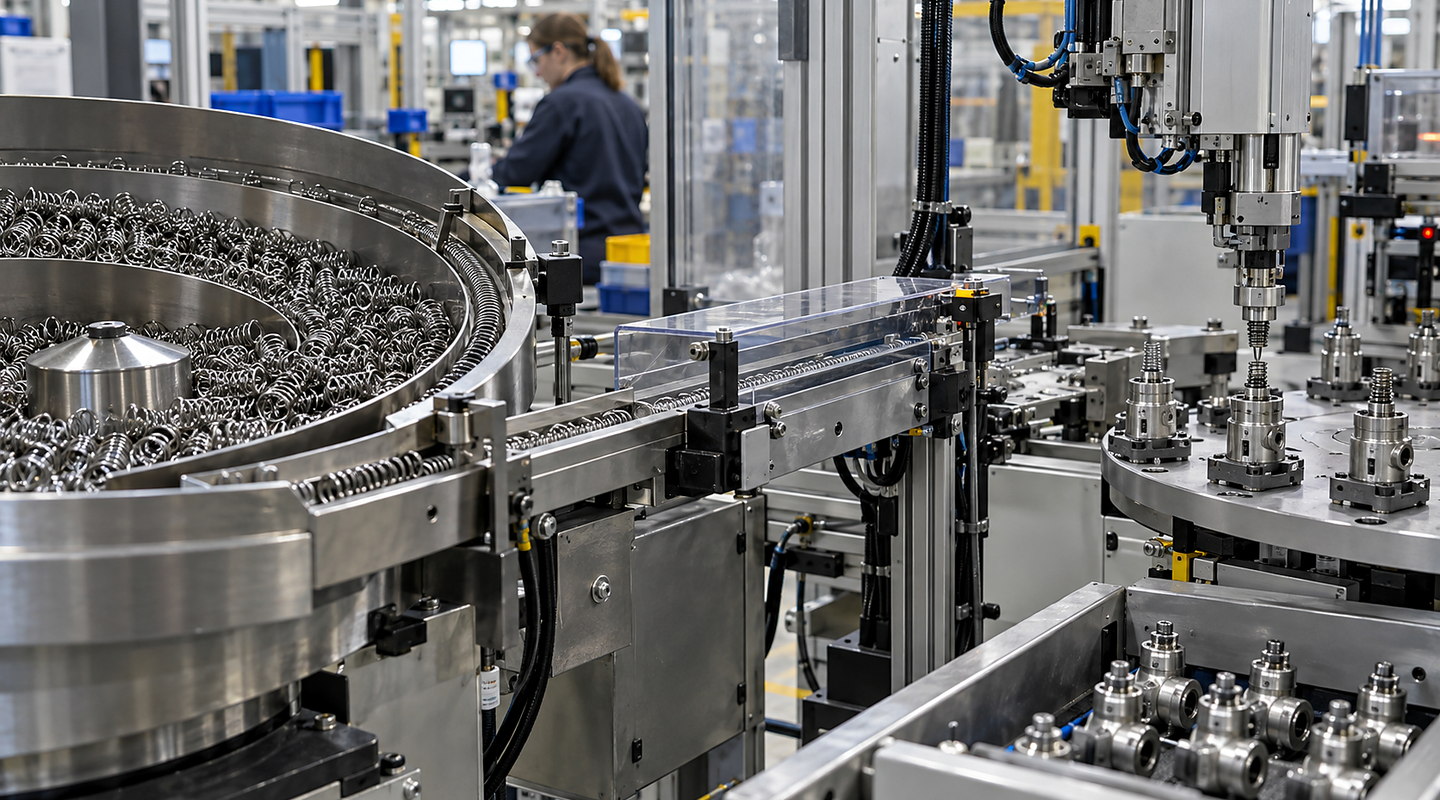
Photographs show general component feeding, including coil springs. Button feeding must be assessed with the actual button range and required pick-up condition.
In brief
Count acceptable single buttons at the real downstream pickup, with the required face and rotational position. Record cosmetic damage, orientation errors, missing or double parts and interventions separately; nominal feeder output does not establish usable delivery.
Turn your production information into clearer decisions — Button Feeding Systems
Plan button feeding systems around real component variation, bulk condition, orientation, usable delivery rate and the downstream interface. Discuss representative part trials with Sorting Solutions. Use this guide to resolve jam, damage and recovery acceptance checks before it limits the final system.
Jam, Damage and Recovery Acceptance Checks: condition, range and effect on your process
Current condition
Record the button format and sample range, bulk-loading condition, required pickup orientation and receiving arrangement. Retain accepted-part results, cosmetic checks, missing or double presentations, interventions and the settings used.
Realistic range
For Button Feeding Systems, include normal production conditions, credible extremes, product or part variants and changes over time.
Effect on the system
Record the response to each agreed fault and the operator tasks needed for recovery. Repeat the relevant orientation, single-part and cosmetic checks after restart or a format change before accepting the trial result.
Before you contact us
Five questions about jam, damage and recovery acceptance checks for your application
Who can confirm this information?Identify the person responsible for jam, damage and recovery acceptance checks in production, quality, engineering or operations.
How representative is the sample?Include age, supplier, batch, environment and upstream process state where they affect button feeding systems.
What is the difficult condition?Include the slow, reflective, flexible, dirty, damaged, marginal or uncommon case that your system must still handle.
How will you judge the result?Agree the method, repetitions, acceptable range, result record and the response if the observed result falls outside the agreed range.
What else must be coordinated?Your final button feeding systems scope must also account for escapement and downstream pick interface, jam, damage and recovery acceptance checks, current regulations and the conditions at your site.
Connected details
Review jam, damage and recovery acceptance checks as part of the complete system
Question 1
Component Geometry and Variation for Button Orientation & Automatic Feeding
Test normal, marginal and supplier-variant buttons within each approved format. Keep the format list, dimensions and required pickup condition with the trial results.
Question 2
Surface, Fragility and Entanglement Behaviour
Compare supplied and circulated samples against the agreed cosmetic examples. A correct face and position must not conceal scuffing, chipped edges or trapped debris.
Question 3
Bulk Condition and Replenishment Method
Include representative nests, stacks and overlaps and the intended replenishment method. Record accepted single parts and operator interventions with loading included.
Question 4
Required Orientation and Delivery Rate
Agree the face and rotational datum, then measure acceptable single buttons at the actual pickup under the stated machine-demand pattern. Do not substitute feeder output for usable delivery.
Question 5
Escapement and Downstream Pick Interface
Use the actual receiving nest or gripper and agreed signal sequence. Demonstrate missing-part and double-part responses and confirm when the next button can advance.
Question 6
Jam, Damage and Recovery Acceptance Checks
Challenge the agreed jam and format-change cases. Retain recovery tasks, recovered settings and the first acceptable single-button pickup, with separate orientation and cosmetic results.